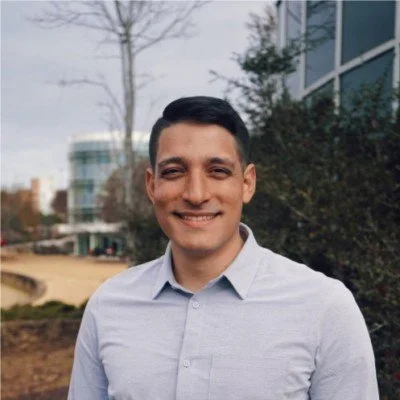
Nick Uranga
Matt Walsh
Sr. Director, Head of Global Talent Acquisition & People Operations - Auctane
For Nick Uranga, recruiting was a career he discovered by accident.
His journey began in the early 2010s during the height of the LTE expansion, when telecommunications companies were racing to build faster networks and expand coverage.
At the time, Nick was brought into a small firm as a project coordinator within a newly formed telecommunications vertical. In that role, he learned the industry from the inside—how telecom projects operated, what the work required, and how teams moved quickly during a period of major infrastructure growth.
After a few months, the business shifted direction. The same firm also had a staffing division, and Nick was moved into a recruiting role.
That transition changed everything.
Because of his project coordination experience, Nick had an advantage. He could speak with telecom professionals in a way that felt informed and credible, giving him a deeper understanding of their work than a typical recruiter might have had early on.
That knowledge helped him find early success in agency recruiting.
“I was able to go in and have conversations with telecom people that a normal recruiter probably couldn’t.”
What started as an unexpected move quickly became a meaningful career path.
Nick discovered that he genuinely enjoyed speaking with people, learning their stories, and helping them find career opportunities they may not have discovered on their own.
Over time, that purpose became central to why he stayed in recruiting.
“It became part of my DNA,” he says. “It’s the reason I get up every morning—to help people find opportunities, make career moves, make more money, and ultimately find success in their careers.”
From Agency Recruiting to Corporate Talent Acquisition
After spending years in agency recruiting, Nick eventually transitioned into corporate talent acquisition.
That move allowed him to take the skills he had developed—relationship-building, market knowledge, sourcing strategy, and candidate engagement—and apply them within larger organizational environments.
Throughout his career, Nick has continued to focus on recruiting as both a people-centered function and a business-critical discipline.
For him, talent acquisition is not simply about filling roles. It is about understanding the business, solving problems, creating value, and helping organizations build stronger teams.
Leaders Who Shaped His Career
When reflecting on the leaders who have influenced him most, Nick points first to Shrestha Taylor, his first VP of HR in a corporate role.
He credits her with believing in him, giving him confidence, and allowing him the space to develop his own approach.
“She let me be me,” Nick says.
Rather than forcing him into a rigid way of working, Shrestha encouraged him to figure things out, solve problems, fail fast, and try new ideas.
That environment helped Nick build confidence and develop an entrepreneurial mindset inside the organization.
“There was no such thing as a bad idea,” he recalls.
Another important mentor was Shane Fleeman, who helped shape the way Nick thinks about talent acquisition as a business function.
Through Shane’s guidance, Nick came to see TA not as a cost center, but as a revenue generator, value creator, and essential part of organizational success.
That perspective has stayed with him throughout his career.
Nick also credits leaders and colleagues including Brian Simons, Tim Husted, and Sean McDavid for helping him become a business-first thinker and problem solver.
Rather than seeing himself as simply an HR professional, Nick views his work through the lens of business impact.
“I try to avoid being the process police,” he says.
Instead, he focuses on solving problems, creating value, and helping talent acquisition become a true strategic partner.
Building Strong Foundations Before Adding Technology
As AI and new recruiting technologies continue to evolve, Nick believes talent leaders must avoid chasing tools without first building a strong foundation.
From his perspective, technology can absolutely create efficiency, streamline workflows, and improve the recruiting experience. But it only works if the underlying process is strong.
“If you don’t have a strong foundation and a human-led approach, the technology isn’t going to have the impact you want.”
Nick compares it to baking a cake.
If you skip the foundational layers and go straight to the icing, the cake falls apart.
The same is true in talent acquisition.
Before organizations implement new technology, they must understand their processes, reduce waste, clarify workflows, and define what they are actually trying to improve.
As someone who values Lean Six Sigma principles, Nick looks closely at each step of the recruiting process and asks how teams can reduce friction while improving the experience for candidates, recruiters, and hiring managers.
Technology, in his view, should strengthen the process—not compensate for a broken one.
Advice for Talent Leaders Heading into 2026
As talent acquisition moves deeper into the age of AI, Nick’s advice for other talent leaders is clear: do not lose the human-first approach.
He believes human connection will become one of the biggest differentiators in a market where candidates may increasingly interact with bots, automation, and AI-driven systems.
“Do not go away from the human-first approach.”
For strong candidates with multiple options, the quality of human interaction can make a major difference.
Technology can support the work, but recruiters still have an advantage when they bring empathy, judgment, relationship-building, and personalized communication into the process.
Nick also believes talent acquisition leaders must continue reframing TA as a source of business value.
Recruiting should not be viewed only as a cost center or administrative function. Instead, it should be seen as a competitive advantage.
“How do we look at recruiting as a competitive advantage for the business?”
For Nick, that means creating a stronger narrative around talent acquisition’s role in business growth, candidate experience, workforce strategy, and long-term organizational success.
The next evolution of talent acquisition, he believes, will come from leaders who can combine human connection, business thinking, operational excellence, and thoughtful use of technology.
By staying grounded in a human-first philosophy while embracing innovation with discipline and purpose, Nick Uranga represents the kind of talent leader prepared to help shape the next chapter of recruiting.
