Karim Akram
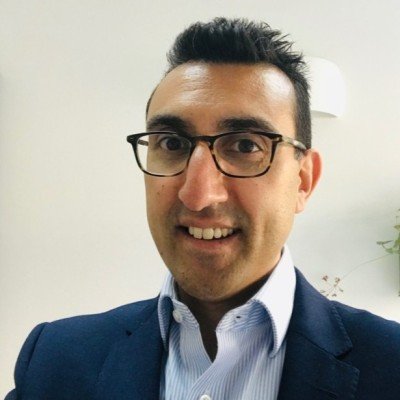
Karim Akram
Director - Head of Talent Acquisition UKI & Head of Executive Recruitment - Infrastructure, Deutsche Bank
Like many talent leaders, Karim Akram never planned on building a career in recruiting.
After graduating in 2005 with a business degree, Karim began his career in finance at BNP Paribas, where he spent a year working in an operations finance role.
But he already knew he wanted to travel and explore the world, so after that first year, he took a gap year to do exactly that.
When he returned, he spoke with a headhunter who initially placed him into another finance role.
It quickly became clear that finance was not where he wanted to build his career.
After explaining this to the recruiter, Karim was invited to consider an opportunity within the recruitment firm itself.
He started as a researcher.
Three months later, he was offered a permanent position.
What began as an unexpected career move eventually turned into a successful agency recruitment career spanning nearly five years, including managing a high-performing team and progressing through the ranks.
Ironically, Karim's finance background became an advantage.
He was recruiting finance professionals, allowing him to combine his existing industry knowledge with the relationship-building and business-development skills he was developing as a recruiter.
What started as a chance conversation ultimately became the foundation for a career in talent acquisition.
Learning to Recognize Potential
Throughout his career, Karim credits several managers with shaping the way he thinks about recruiting and leadership.
His first manager in agency recruitment played an especially important role early on.
He took Karim under his wing, teaching him how to build rapport with people, engage with clients, and develop the skills required to succeed as a headhunter.
More importantly, he provided the support, encouragement, and confidence Karim needed while allowing him to remain himself.
Karim describes himself as someone who was hungry to succeed—and says that hunger was recognized and encouraged by his manager.
That early experience shaped his understanding of what effective leadership can look like: providing people with the support they need while helping them develop their natural strengths.
A second manager had an equally significant impact later in Karim's career at Deutsche Bank.
The two had barely interacted before an unexpected conversation changed the direction of Karim's career.
At the time, Karim was working as an internal recruiter on a busy finance, change, and risk desk after moving from agency recruitment to an on-site role.
During one of his weekend visits to the office, he crossed paths with the manager, who was there for system testing.
Several months later, they had a formal meeting.
After seeing how Karim handled the conversation, the manager asked whether he had ever considered working directly for the bank in executive recruitment.
Karim had spent years in contingent recruitment and didn't have a traditional executive recruitment background.
But the manager recognized something more important: his transferable skills and potential.
He ultimately gave Karim the opportunity to make the transition.
That experience continues to influence how Karim approaches hiring today.
Rather than focusing exclusively on whether someone has performed the exact job before, he looks at their potential, transferable skills, and what the team actually needs.
"I look for potential and skills and what is it we need rather than looking at specifically the experience."
Using AI to Optimize the Recruiting Process
Karim has watched AI become increasingly embedded in recruiting, but his approach is deliberately practical.
His team is preparing to implement AI into its recruitment process through a new CRM, while they've already been experimenting with Microsoft's Copilot.
Since receiving Copilot in November, Karim and several colleagues began exploring how it could be incorporated into their daily work.
That experimentation has since evolved into training, processes, and guidance for recruiters.
One of the most practical applications is using AI to support requirements meetings with hiring managers.
Copilot can take notes during the conversation, capturing details around the role, sourcing strategy, requirements, and desired skill set.
Recruiters can then use that information to create an initial job specification.
The same information can also help generate interview questions and identify areas that may require further exploration.
For Karim, the value is not about handing the recruitment process over to AI.
It's about reducing the administrative burden that can slow recruiters down.
Creating a job specification, documenting requirements, and organizing information can take considerable time.
AI can help accelerate those early stages while allowing recruiters to spend more time on the work that requires human judgment.
The key, however, is keeping the human in control.
Recruiters review the AI-generated information before it is shared with hiring managers or entered into systems such as Workday.
At this stage, Karim's team is not using the technology with candidates.
The goal is to use AI to support recruiters—not make decisions for them.
AI Should Be the Co-Pilot, Not the Pilot
For Karim, the most important principle surrounding AI is contained in its name.
It should be a co-pilot.
The recruiter remains the pilot.
His advice to talent professionals is straightforward: look at your existing processes and identify where AI can genuinely improve them, particularly when it comes to administrative work.
But don't try to automate everything.
"The moment you stop thinking for yourself, the moment you're—you become irrelevant as a recruiter."
AI can gather information, organize it, summarize conversations, and optimize processes.
But recruiters still need to interpret that information, make decisions, understand the business, and advise hiring managers.
That human expertise is what ultimately makes a talent professional valuable.
Karim believes recruiters should be evolving into experts, consultants, and advisors—not simply administrators of the hiring process.
By reducing administrative work, AI can create more time for recruiters to speak with candidates and spend meaningful time understanding the business's needs.
Protecting Human Judgment
Karim's philosophy around AI ultimately comes down to maintaining human judgment.
Technology can make recruiting faster.
It can make processes more efficient.
It can reduce repetitive administrative work.
But recruiters still need to think critically about the information AI provides.
That means reviewing outputs, questioning results, and remaining accountable for decisions.
The technology should support the recruiter's expertise rather than replace it.
For Karim, the most effective future of recruiting is therefore not one where AI makes every decision.
It is one where AI handles more of the operational workload while recruiters become even more valuable as strategic advisors.
Advice for Talent Leaders
Karim's advice to talent leaders is to start with the process rather than the technology.
Look at where time is being spent.
Identify repetitive administrative tasks.
Then determine where AI can help optimize those activities.
But maintain human oversight throughout the process.
The recruiter should remain responsible for interpreting the information, making decisions, and advising the business.
That balance becomes especially important as AI continues to evolve.
For Karim, the goal is not simply to make recruiters more efficient.
It is to free them to spend more time doing the work that technology cannot replace: building relationships, understanding people, and advising the business.
Advice for Candidates in an AI-Driven Market
Karim also sees another side of AI's impact: how candidates are using it during their job searches.
He has noticed the growing number of tools that automatically apply to jobs on behalf of candidates.
Some applicants may find themselves applying to hundreds of positions without fully knowing what they have applied for.
Karim believes this is ultimately the wrong approach.
Applying to more jobs does not necessarily increase the chances of finding the right one.
Candidates still need the appropriate skills and experience for the role, and they need to understand what they are actually applying for.
AI can also be useful for improving resumes, but Karim cautions candidates against relying on AI-generated content without reviewing it.
Recruiters can recognize when resumes become generic or contain inaccuracies.
More importantly, candidates still need to demonstrate their own knowledge and experience during the hiring process.
His advice is simple:
Be yourself.
Use AI as a tool, but make sure your resume remains in your own voice.
Apply for positions that genuinely align with your skills and experience.
And never allow AI to exaggerate qualifications you don't actually have.
Because even in an increasingly automated recruitment process, candidates still have to demonstrate who they are.
Keeping People at the Center
Karim's career began unexpectedly when a recruiter recognized that his skills could translate into talent acquisition.
Years later, that same belief in potential has become a central part of how he approaches hiring and leadership.
His experiences have taught him to look beyond job titles and traditional experience and instead consider what people can bring to a role.
Now, as AI continues reshaping recruiting, he applies the same philosophy to technology.
AI can improve the process.
It can reduce administrative work.
It can help recruiters move faster.
But it should never replace the human judgment at the heart of talent acquisition.
For Karim Akram, the future of recruiting isn't about making the human element less important.
It's about using technology intelligently so recruiters have more time to make that human element matter.
