Andre Boulais
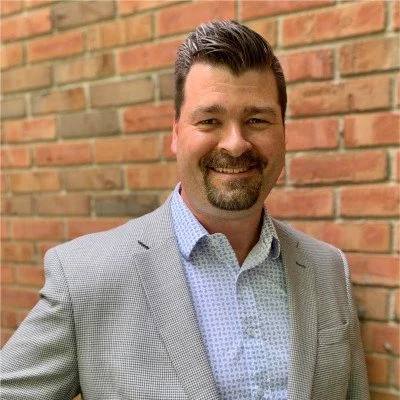
Andre Boulais
Senior Vice President of Revenue and Customer Success - Betterleap
Andre Boulais never planned on building a career in recruiting.
After graduating in 2001 with a double major in English Literature and Composition, he initially imagined a very different future.
Then two things happened.
The dot-com boom collapsed, followed shortly by the events of 9/11.
A friend he respected recommended that Andre interview with Kforce, a staffing company. He expected it to be a temporary stop before eventually moving into pharmaceutical sales.
Instead, he found recruiting.
And he fell in love with it.
What drew Andre in was the opportunity to connect the needs of businesses with the right talent in the market—and, ultimately, to see how those connections could change people's lives while helping organizations transform.
That realization became the foundation of a career spanning more than two decades across talent acquisition, executive recruiting, sourcing, technology, consulting, and professional services.
From Staffing Recruiter to Talent Technology Strategist
Andre spent seven years at Kforce, where he worked across healthcare and supported organizations including Eli Lilly and Clarion Health, now part of Indiana University.
One of his early career highlights was helping transform Kforce's Indianapolis office.
The office had been ranked 48th out of 52 offices.
Andre and his team helped turn it into the number-one office in the country.
But one story from that period continues to stand out.
Andre was involved in an executive search for a major customer looking for a leader for its revenue cycle division. He helped relocate an executive and his family from Florida to Indiana.
The executive's young son was an elite diver who needed to be in Indianapolis to train and qualify for the Olympics.
Years later, Andre watched that same young man compete in the Olympics.
For Andre, the story captured something fundamental about recruiting.
It is not simply about filling jobs.
The decisions made through talent acquisition can change the trajectory of entire families.
Eventually, Andre became Talent Director for the division before moving into the technology side of the industry.
He joined ExactTarget, one of Indianapolis's fastest-growing digital marketing SaaS companies at the time, to build a sourcing function.
Although he had never formally built a sourcing team before, his background in executive recruiting had already taught him the fundamentals of finding and engaging talent.
At ExactTarget, Andre built a global sourcing team supporting a 45-person talent acquisition organization.
He experienced the company going public and worked through three acquisitions before ExactTarget was ultimately acquired by Salesforce.
The experience gave him a new perspective on talent—not only as a practitioner, but also as someone responsible for building systems and strategies that could operate at scale.
Building Talent Strategy Across Six Continents
After roughly a decade on the talent acquisition side, Andre made another major career transition.
He joined Jobvite, one of the company's technology vendors, to help build out its professional services organization.
Andre became the first Jobvite employee in Indiana and worked with leaders including CEO Dan Finnegan.
The division eventually evolved into Managed Services, where companies paid for consulting and specialized teams to work directly with their organizations on talent acquisition strategy.
The work took Andre around the world.
His teams developed talent strategies across six continents and partnered with some of the largest organizations in the world.
One cybersecurity customer stands out in particular.
By helping the organization expand globally and accelerate its hiring strategy, Andre's team helped the company reach its IPO two years earlier than it otherwise expected.
Through these experiences, Andre found himself consistently operating at the intersection of three areas:
Transformation. Talent acquisition. Technology.
That intersection became the defining theme of his career.
The Leaders Who Shaped His Philosophy
When asked to name three leaders who had the greatest impact on his career, Andre immediately acknowledged that narrowing the list down was difficult.
But three names stood out: LaDonna Tucker, M.T. Ray, and Craig Fisher.
LaDonna Tucker: Trust Is Earned
LaDonna Tucker was the person who originally recommended Andre for the Talent 100 recognition.
She also became one of his most important professional influences.
Andre learned from LaDonna the importance of addressing problems directly.
When there is a problem, he believes leaders should address it upfront rather than allowing it to grow.
But perhaps more importantly, LaDonna taught him the importance of earning trust.
When Andre first joined Jobvite, one of the software rollouts was not going as smoothly as expected.
Rather than simply accepting the existing approach, LaDonna gave Andre and his team the opportunity to listen, rethink the strategy, and develop an alternative.
She then opened the door for them to demonstrate what the technology could accomplish across other regions.
That trust eventually helped the team expand the solution across multiple continents.
The experience shaped one of Andre's core beliefs about client relationships:
A technology company should never think of itself simply as a vendor.
It should think of itself as an extension of the customer's team.
Andre still remembers the many Schneider Electric polos, fleeces, and hoodies he collected during those years.
But what mattered more was the relationship behind them.
The team wasn't simply implementing software.
They were working alongside their customers to advance their mission.
M.T. Ray: Accountability and Candor
Another major influence was M.T. Ray, a leader Andre worked with at ExactTarget and Salesforce.
Andre describes her as someone who led by example while demanding the best from everyone around her.
She created an environment where people were expected to grow—but also held accountable for doing so.
From her, Andre learned what meaningful accountability looks like.
He also learned the importance of candid advice.
Sometimes leadership means having difficult conversations.
It means calling someone to task when necessary.
And it means being willing to tell people what they need to hear rather than simply what they want to hear.
Today, M.T. Ray works as a leadership coach in the Indianapolis area, continuing to influence leaders in much the same way she influenced Andre.
Craig Fisher: Be a True Partner
Craig Fisher became another significant influence in Andre's career.
A global speaker and leader in recruiting, talent acquisition, employer branding, and talent marketing, Fisher also created TalentNet, a long-running talent conference in the Southwest.
Andre first worked with him as a customer while Fisher was leading global talent acquisition and employer branding at CA Technologies.
The project involved launching a CRM globally.
Instead of simply rolling out the same technology everywhere, the team brought stakeholders together, listened to their pain points, understood their goals, and built buy-in around the transformation.
That experience taught Andre another important lesson:
Listening is essential—but partnership also requires the courage to push back.
If something isn't going to work, a true partner should say so.
"You truly are a partner in that capacity," Andre explains.
Fisher also reinforced another value that has become increasingly important to Andre: giving back.
Andre believes leaders have a responsibility to help cultivate the next generation of talent leaders.
He describes himself as fortunate to have had a "council of elders"—experienced leaders who helped guide his career.
Now, he sees it as his responsibility to provide that same guidance to others.
AI Is Arriving Faster Than Anyone Expected
Andre has been working around AI and emerging technology for much of his career.
After leaving Jobvite, he worked with Intello, where he saw early applications of AI and predictive analytics around next-role fit.
He later joined an AI startup called Conect, where he saw firsthand how technology could accelerate recruiting for healthcare and hospitality organizations.
He also experienced AI's growing role in reducing administrative work in talent acquisition.
But even with all of that experience, the pace of recent AI development has surprised him.
AI has arrived much faster than many people expected.
A year or two ago, Andre was speaking to CHROs and CEOs about the potential of AI.
Today, many of those possibilities are already becoming part of everyday recruiting operations.
For Andre, however, the fundamental principle remains simple:
AI is a tool.
He compares the current AI moment to the rise of smartphones.
Twenty years ago, the idea that one device could put an enormous range of capabilities into someone's pocket would have seemed unrealistic.
Today, nobody questions it.
The same principle applies to AI.
The technology itself is not the answer.
How humans use it is what matters.
When AI Gets It Wrong, Humans Still Matter
One of Andre's favorite AI stories comes from working with a large restaurant group that was struggling with an extraordinary problem.
Approximately 90% of scheduled candidates were not showing up.
After implementing AI recruiting technology, the organization went from roughly 90% no-shows to 90% of candidates showing up—with approximately half receiving offers.
The transformation was dramatic.
But the most important part of the story wasn't the AI.
It was what happened when the AI got something wrong.
The system gave candidates an AI-generated score indicating how strong of a fit it believed they were.
One candidate received a 47% score.
The technology suggested she wasn't a particularly strong match.
But the recruiting team decided to look beyond the score.
They watched her introductory video.
She spoke enthusiastically about her experience, shared her knowledge of the role, and even demonstrated how she made her favorite drink.
The human recruiters saw something the algorithm hadn't captured.
They hired her.
Four months later, she was the organization's number-one employee.
For Andre, the lesson was clear.
AI can provide valuable information, but it should never eliminate human judgment.
The candidate's humanity ultimately mattered more than her algorithmic score.
Automate the Administrative Work. Humanize the Experience.
Andre believes the best use of AI in recruiting is to eliminate administrative work so recruiters can spend more time doing what only humans can do well.
Having meaningful conversations.
Understanding candidates.
Partnering with hiring managers.
Building relationships.
Solving complex problems.
His advice to talent leaders is straightforward:
Use AI to reduce administrative tasks, but don't outsource human judgment.
If technology can give recruiters five additional meaningful conversations each week, that may be far more valuable than simply increasing the number of automated tasks they can complete.
But automation also requires oversight.
Andre believes leaders should regularly audit their systems and data.
Monthly and quarterly reviews can help determine whether the information is accurate, whether trends are developing, and whether the technology is actually improving outcomes.
AI should make recruiting teams more valuable—not less accountable.
The Responsibility to Pay It Forward
Throughout his career, Andre has experienced recruiting from almost every angle.
He has been a recruiter.
A talent leader.
A sourcing leader.
A technology customer.
A consultant.
A professional services executive.
A strategist.
Those experiences have given him a unique perspective on the industry.
But perhaps the most consistent theme throughout his career has been partnership.
Whether working with a candidate, a customer, a recruiting team, or another leader, Andre believes the goal should be to create something better together.
That philosophy also shapes how he thinks about leadership.
The leaders who make the greatest impact aren't simply the ones who build successful teams.
They are the ones who help other people become successful leaders themselves.
Andre has benefited from that kind of mentorship throughout his career.
Now, he sees paying it forward as part of his responsibility.
For Andre Boulais, the future of talent acquisition isn't about technology replacing people.
It's about technology giving people more time to do what matters most.
And it's about leaders using that opportunity to build stronger relationships, solve bigger problems, and cultivate the next generation of talent leaders.
