Adam Meekhof
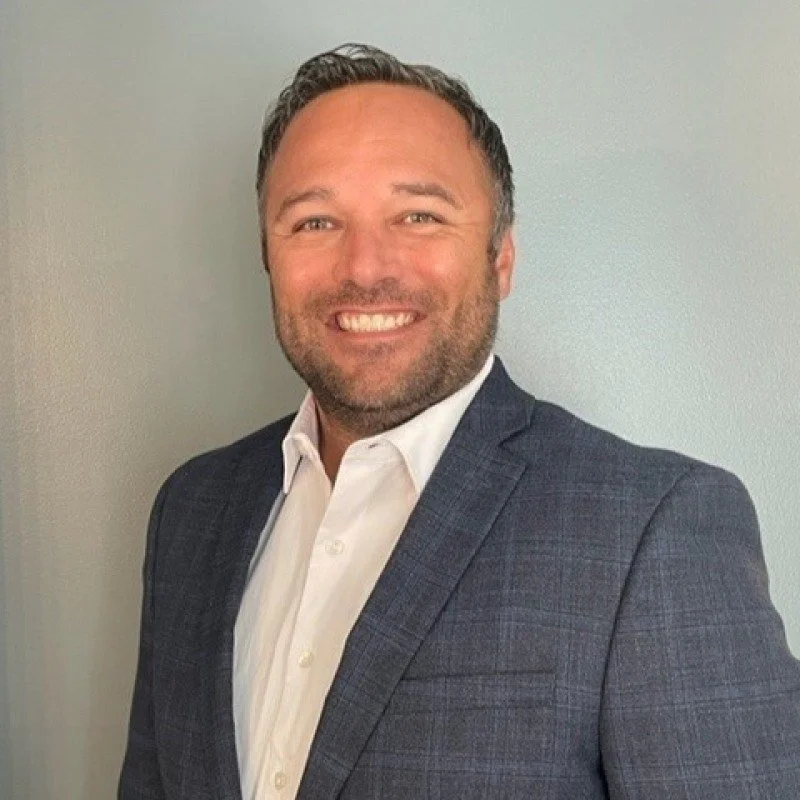
Adam Meekhof
Director of Talent Acquisition, Marksman Security Corporation
Like many experienced talent leaders, Adam Meekhof didn’t originally plan on becoming a recruiter. His journey into the field came through exploration, mentorship, and a willingness to pivot when something didn’t feel right.
Right after college, Adam began his career working in door-to-door sales. While the role helped build resilience and work ethic, he quickly realized that type of sales environment wasn’t the long-term path he wanted to pursue.
A conversation with a friend ultimately changed everything.
That friend had transitioned into recruiting and suggested Adam explore the field. At the time, his only exposure to recruiting was through sports recruiting, so the idea of professional recruiting was entirely new to him.
Still, he was curious.
“I literally told her, ‘I don’t know what you do, but I need a job,’” Adam recalls.
She connected him with an opportunity at Aerotek, a staffing firm within the Allegis Group. Adam landed an interview, got the job, and began what would eventually become a 20-year career in recruiting and talent leadership.
From there, his experience expanded across industries and recruiting environments. Over the years he has worked in:
Hardware and software recruiting
Embedded systems
Healthcare
Fintech
Manufacturing
Security and consulting
Today, Adam leads recruiting for a security company, where he oversees the hiring strategy and talent operations that help the organization grow.
Looking back, the journey may not have been planned—but it turned out to be the perfect fit.
Leaders Who Shaped His Approach
Throughout his career, several leaders have played a major role in shaping how Adam approaches recruiting and leadership.
Ayman Hamid (Aerotek) was one of the earliest and most influential mentors in Adam’s career. He helped Adam understand professionalism in the business world, holding him accountable while teaching him how recruiting fits into broader business operations.
Joanna Luth (Aptean) reinforced the importance of always seeing the person behind the candidate. She helped Adam build the confidence to approach recruiting with empathy, reminding him that recruiters have the ability to truly impact people’s lives.
Trent Cotton (iCIMS) became a mentor through industry events and conversations. Adam credits Trent with encouraging him to confidently stand behind his values in recruiting and to continually push the industry forward with new ideas and perspectives.
Recruiting in the Age of AI
With the rapid rise of artificial intelligence across industries, recruiting has been experiencing a major shift.
But Adam sees the change differently than many.
Rather than replacing human interaction, he believes AI has the potential to bring recruiters back to the human side of the profession.
Many of the repetitive, administrative tasks that once filled a recruiter’s day—reporting, scheduling, and data gathering—can now be handled by technology.
That frees recruiters to focus on what matters most.
“AI is allowing us to be more human,” Adam explains.
When used properly, technology can remove operational friction and give recruiters more time to build relationships with candidates, hiring managers, and employees.
In Adam’s view, this shift is almost a return to the roots of recruiting—a profession built on trust, connection, and meaningful conversations.
Advice for Talent Leaders Heading Into 2026
As recruiting continues to evolve, Adam believes the biggest challenge for talent leaders isn’t technology itself—it’s how leaders respond to it.
His advice is simple: slow down.
With so many new tools emerging, it’s easy for organizations to rush into adopting technology without fully considering its impact on their teams.
Many employees are already hearing constant messaging that AI could eventually replace jobs. That uncertainty can create anxiety and hesitation within recruiting teams.
Because of that, Adam believes leaders need to focus on supporting their people during this transition.
“If you lead a recruiting team today, you have to see the person across from you,” he says.
Beyond that, he believes the role of talent acquisition is evolving into something even bigger.
As AI takes over more administrative work, recruiters will increasingly become internal business consultants—leaders who help organizations solve complex problems through hiring strategy, workforce planning, and talent insights.
In the future, recruiting teams won’t just fill roles.
They will shape how businesses grow.
