Stephen Childs
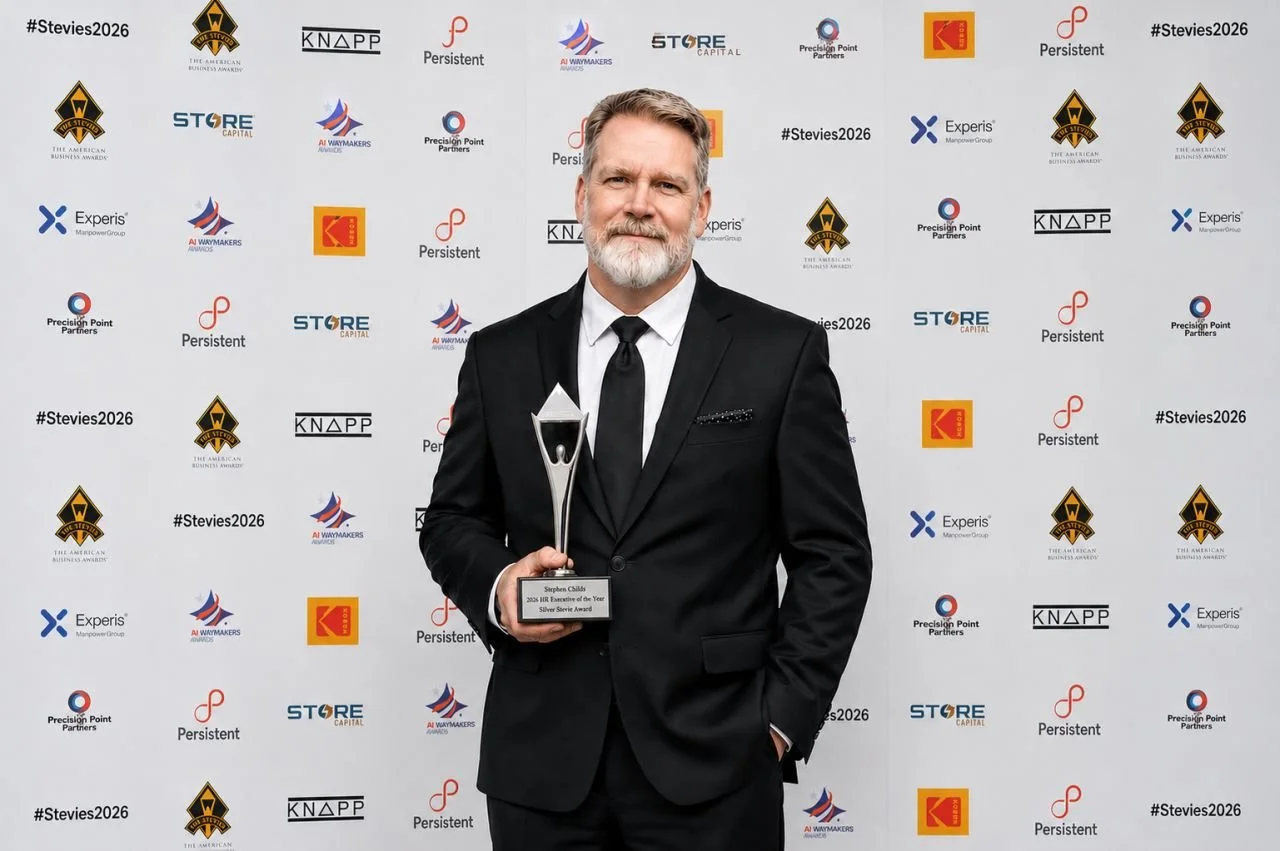
Stephen Childs
CHRO/VP Human Resources, Panasonic Automotive
For Stephen Childs, a career in people leadership began with entrepreneurship.
Although he studied finance, Stephen’s first professional step was starting his own employment services company. At the time, he did not think of it as an HR career. He was building a business.
But in practice, nearly everything he did touched human resources.
He hired people, managed placements, handled payroll, coordinated drug tests and background checks, managed workers’ compensation, and supported hundreds of employees across dozens of businesses.
“At one point, I had about 300 people across roughly 30 different businesses,” Stephen recalls.
After eventually selling that business and continuing in the employment services space, he realized he had built a deep foundation in talent, operations, and people leadership without initially planning for it.
“My first job just happened to be in HR,” he says.
Leading with an Entrepreneurial Mindset
Stephen’s entrepreneurial background has shaped the way he approaches leadership today.
Unlike many HR leaders who may be naturally risk-averse, Stephen has always been comfortable stepping into uncertainty.
That mindset became one of the defining factors in his career growth.
“I call it the saying yes factor,” he says.
When new opportunities came up, Stephen often raised his hand, even if the work was unfamiliar. He trusted himself to learn, adapt, and figure things out along the way.
That willingness to take on new challenges helped him expand beyond talent acquisition into broader HR and executive leadership.
For Stephen, entrepreneurship taught him that risk is often part of growth.
After starting, growing, and selling a company, he carried the belief that most challenges could be solved with curiosity, effort, and the willingness to move forward.
Learning to Think Like a Business Leader
When reflecting on the people who shaped his career, Stephen points to leaders who challenged him to think bigger.
One influential figure was Steve Spires, an executive coach who worked with Stephen’s CEO at the time.
Through secondhand exposure to those coaching conversations, Stephen absorbed lessons about courage, leadership, and pushing beyond the expected boundaries of HR.
“He encouraged me to take bigger risks and fight for the things that mattered,” Stephen says.
Another defining influence was Tom Gephardt, a CEO who helped reshape how Stephen viewed his own role.
When Tom promoted Stephen into a senior HR leadership role, he quickly clarified the expectation.
“He told me, ‘You’re not the VP of HR. You’re the VP of the company, and I need you to focus on HR,’” Stephen recalls.
That moment changed Stephen’s perspective.
Instead of seeing himself first as an HR leader, he began seeing himself as a business leader whose area of focus happened to be people.
That shift has continued to guide his leadership philosophy.
Preparing for the AI Era
As HR and talent acquisition continue to evolve, Stephen believes leaders must take ownership of their own learning—especially when it comes to AI.
He sees talent acquisition professionals as some of the most tech-savvy people within HR because the function has long been shaped by emerging tools, from job boards to LinkedIn to modern recruitment platforms.
Now, AI represents the next major shift.
Stephen’s advice to leaders is clear: do not wait for your company to train you.
“There are so many free courses available,” he says. “There is zero excuse.”
He encourages people leaders and talent professionals to invest both work time and personal time into understanding AI, experimenting with tools, and building fluency before the market forces them to catch up.
“If you wait for the company to do it, you’re going to be far behind,” he says.
For Stephen, the future of recruiting will require talent acquisition professionals to become AI-enabled facilitators of hiring.
Technology will continue changing the work, but leaders who proactively learn and adapt will be best positioned to lead through that change.
Advice for Leaders Heading into 2026
Stephen believes the next phase of people leadership will belong to those who combine business thinking, technological curiosity, and the courage to take risks.
The tools will change. The expectations will evolve. The pace will only increase.
But leaders who stay curious, invest in themselves, and think beyond traditional functional boundaries will continue to create meaningful impact.
By combining entrepreneurial courage, business-first thinking, and a forward-looking approach to technology, Stephen Childs represents the kind of people leader prepared to help organizations navigate what comes next.
