Sophie Taylor
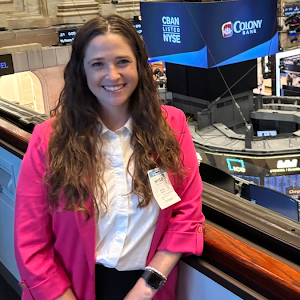
Sophie Taylor
Head of People Operations, Mural Health
Like many leaders in talent acquisition, Sophie Taylor did not originally set out to build a career in recruiting.
Her introduction to the profession came early in her HR career after completing her master’s degree in HR Development, when a senior international HR leader gave her a piece of advice that would ultimately shape the trajectory of her career.
“The ability to assess talent and do it well will serve you well in your entire career,” he told her.
That lesson stayed with Sophie immediately.
At the time, she was working in a generalist HR role and trying to determine what direction to pursue next. But after hearing that advice, she made a direct pivot into recruiting more than a decade ago — a decision that would eventually lead her into talent leadership and ultimately into her current role as Head of People at Mural Health.
For Sophie, recruiting was never simply about filling positions.
It was about understanding people, aligning talent to business needs, and helping organizations grow intentionally through the individuals they bring into the company.
And throughout her career, that mindset has remained central to how she approaches leadership.
Building a Recruiting Philosophy Around Business Alignment
One of the themes that consistently shaped Sophie’s career was learning how recruiting connects directly to business success.
Early in her career, one of her strongest influences was Eric Lane, her first manager in the HR space after graduate school.
Sophie credits Eric with teaching her how to focus her energy on the work that creates the greatest impact, while also helping her understand the importance of learning the business deeply in order to better support internal stakeholders.
Rather than viewing recruiting as a siloed HR function, Sophie learned to approach talent acquisition through a business-first lens.
That perspective became foundational to how she evaluates talent today.
Another major influence in Sophie’s journey was Kenia Edwards, a former peer on the early career and diverse talent recruiting team at Cigna.
Kenia helped Sophie learn the fundamentals of recruiting from the ground up and played a significant role in shaping her understanding of the profession early in her career.
Sophie also highlighted Darla Haas, a former CHRO she reported to at two different organizations, as an influential leader in her development.
From Darla, Sophie learned the importance of organization, executive communication, and the ability to clearly articulate not only why a candidate is qualified, but how that individual contributes to business outcomes, organizational culture, and long-term company growth.
That ability to connect talent decisions directly to strategic business objectives continues to define Sophie’s leadership philosophy today.
AI, Automation, and the Future of Recruiting
As AI rapidly reshapes the recruiting industry, Sophie sees enormous opportunity for talent teams willing to embrace the technology thoughtfully.
In her view, AI has already become a major unlock for recruiter productivity and operational efficiency.
“Not utilizing AI tools, you are easily falling behind,” Sophie explained.
But while she believes AI will continue transforming recruiting operations, she also emphasized that human judgment remains essential.
For Sophie, the future is not about replacing recruiters with AI — it is about enabling recruiters to spend more time on the parts of recruiting that matter most.
She believes automation will increasingly handle repetitive administrative tasks, scheduling, messaging workflows, and process coordination.
At the same time, recruiters will be able to dedicate more energy toward relationship-building, candidate engagement, culture alignment, and strategic hiring conversations.
“The automated pieces will become so automated,” Sophie explained, “that we’ll have much more capacity to build true genuine human connection.”
That balance between technological advancement and human-centered recruiting is something Sophie believes organizations must intentionally preserve as AI adoption accelerates.
While automation can improve speed and efficiency, candidates still want authentic interactions with real people — especially during the most critical moments of the hiring process.
“They’re interviewing us as much as we’re interviewing them,” Sophie explained.
For Sophie, the companies that succeed in the next era of recruiting will be the ones that use AI to enhance the recruiter experience without sacrificing the human side of hiring.
Leading as a Modern Talent Operator
Currently serving as the sole HR leader at Mural Health, Sophie operates in an environment that requires both strategic thinking and hands-on execution.
Working within a startup environment has pushed her to stay highly adaptable while continuously evaluating new technologies, workflows, and recruiting solutions.
One of the practices she values most is intentionally making time to test new systems and tools — even amid the demands of day-to-day operations.
“I think making time for that learning and testing is really important,” she explained.
Rather than fearing failure, Sophie embraces experimentation as part of growth.
She believes the ability to test quickly, learn quickly, and iterate quickly has become increasingly important for modern talent leaders navigating rapid technological change.
That mindset has allowed her to remain agile while helping build scalable people operations inside fast-moving organizations.
Advice for Talent Leaders in 2026
As recruiting continues evolving through AI, automation, and organizational transformation, Sophie believes the most successful talent leaders will be the ones who remain both technologically curious and deeply human-centered.
For recruiting professionals, staying informed about emerging technology is no longer optional.
But equally important is maintaining strong critical thinking, emotional intelligence, and business partnership skills.
Sophie encourages leaders not to fear AI adoption, but instead to approach it thoughtfully — understanding both its capabilities and its limitations.
Most importantly, she believes recruiters should use technology as a tool that enhances their ability to connect with people, not replace it.
Because while AI may continue transforming workflows, efficiency, and operations, Sophie believes authentic human connection will remain at the center of great recruiting for years to come.
