Shane Noe
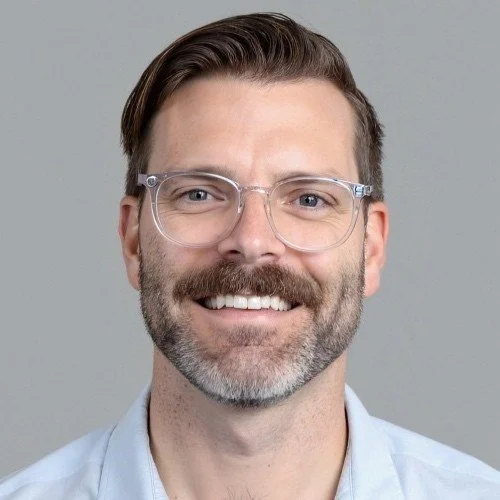
Shane Noe
SVP, Head of People, Astranis Space Technologies
Shane Noe describes himself as a “recovering finance guy” — but his path into talent and people leadership is anything but conventional.
He studied finance at Cal Poly, where one early opportunity shaped the trajectory of his career: acceptance into Apple’s prestigious finance development rotational program. Over two years, Shane rotated through nine roles across Apple’s headquarters and global offices, gaining exposure to engineering, sales, strategy, and finance — and, just as importantly, learning what great leadership looked like… and what it didn’t.
After completing the program, he stayed on in corporate finance, immersed in forecasting models and revenue analysis. From there, he was recruited to Google’s treasury team, where he found himself — at just 25 years old — personally trading billions of dollars a month in foreign exchange derivatives.
“It was insane responsibility,” he recalls. “And it taught me two things quickly: I wasn’t the smartest person in the room, and culture matters more than people realize.”
Discovering the Power of People and Data
Seeking a smaller environment with greater impact, Shane joined Box in strategic planning and analysis. His role put him in the room with senior leadership during annual planning cycles, where he observed executives across every function.
The role that stood out most wasn’t CEO or CFO — it was Chief People Officer.
“What struck me was how that leader anchored business conversations back to people strategy,” Shane says. “It was the first time I really saw HR operating as a strategic function.”
When Box’s finance partner to the People team departed, Shane stepped in temporarily — and uncovered something surprising. Despite headcount representing the majority of company costs, recruiting and HR were operating with almost no data infrastructure.
Recruiters were overwhelmed. Targets were missed. Leaders didn’t have answers — not because they didn’t care, but because they lacked visibility.
So Shane started building.
He created funnel metrics, capacity models, and basic KPIs. He redesigned reporting. Within weeks, recruiting performance became measurable, predictable, and defensible.
That work caught the attention of recruiting leadership — and prompted a career-defining question: Have you ever considered recruiting?
From Finance to Talent Transformation
Despite mentors advising him to stay on the CFO track, Shane made the leap. He moved into recruiting operations leadership at Box, convinced that combining quantitative rigor with talent strategy could unlock massive impact.
“It was the most fun I’d had at work,” he says. “Recruiters are optimistic by nature — that energy is contagious.”
His success at Box led to a call from Okta, where he partnered with Brett Coin to help scale recruiting during a period of explosive growth. The team grew to over 130 people, supporting more than 2,400 hires per year.
What set the function apart was data.
Shane built one of the most advanced people analytics and recruiting intelligence systems in the company — giving leaders the ability to forecast hiring outcomes weeks or months in advance.
“At one point, recruiting may have been the most data-driven function in the entire organization,” he says.
That visibility earned him broader responsibility: people analytics, workforce planning, and People Operations — bringing the same rigor to the entire HR organization.
Rounding Out as a People Leader
To deepen his leadership range, Shane joined ClickUp, where he expanded into compensation, HR business partnerships, real estate, and talent development. The experience rounded out both the operational and human sides of leadership — critical preparation for his next step.
About nine months ago, Shane stepped into his first Head of People role at Astranis.
The decision was deliberate.
“I wanted a role reporting directly to the CEO — and an executive team that truly understood the strategic value of People,” he says.
Astranis didn’t just say the right things — they proved it. When Shane delivered his final presentation, every executive rearranged their schedule to attend.
“That told me everything,” he says. “They get it.”
Advice for Talent Leaders in an AI Era
As AI reshapes talent and people functions, Shane sees strong parallels to the rise of data in recruiting a decade ago.
“Don’t fight the wave,” he advises. “Be curious. Learn. Help shape what comes next.”
He believes AI will fundamentally change the work — but that leaders who embrace it early will define the future of the profession.
Fear, he says, is optional.
Beyond the Resume
Outside of work, Shane co-founded the SnowGlobe Music Festival in Lake Tahoe — a winter electronic music festival that grew to 60,000 attendees over three days at its peak. The festival was acquired by MTV in 2017, a side venture that showcased his entrepreneurial instincts far beyond HR.
He also remains deeply committed to sharing knowledge with the talent community, regularly speaking at industry events and advocating for more data-driven decision-making across recruiting and HR.
One of his biggest inspirations is Laszlo Bock, author of Work Rules!.
“He brought a level of data sophistication to HR that nobody had before,” Shane says.
