Rakesh Rana
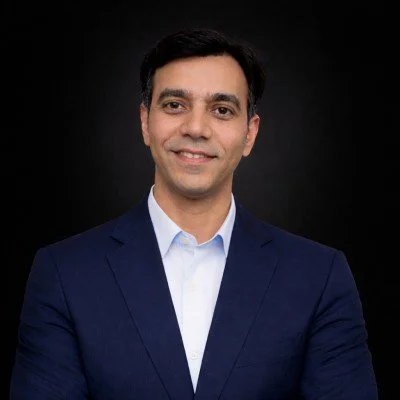
Rakesh Rana
Head of Talent Acquisition - Murex
For Rakesh Rana, talent acquisition was not entirely accidental.
While many recruiters describe falling into the profession from sales or other business functions, Rakesh’s path began with a clear interest in people, psychology, culture, and human resources.
After completing his master’s degree in human resources, he entered the market during a difficult economic period. His original HR opportunity was pulled back, and he soon found himself joining an executive search firm focused on C-suite headhunting.
That experience became the foundation for a long career in talent acquisition.
“For me, I was very sure I wanted to get into HR,” Rakesh explains. “It was people-centric, and that was my interest.”
From the beginning, Rakesh was drawn to the human side of the profession: understanding people, building relationships, and learning how organizations identify and attract the talent needed to grow.
Learning the Business Behind Recruiting
One of the earliest and most influential lessons in Rakesh’s career came from his first leader in executive search.
Rather than teaching recruiting as simply sourcing names or reviewing résumés, that leader encouraged him to understand the broader business landscape.
“He taught me that this industry is all about relationships and business acumen,” Rakesh says.
That lesson shaped the way he approached talent acquisition.
Instead of focusing only on skills and CVs, Rakesh learned to study industries, competitors, business models, and leadership priorities. He developed the ability to gather market intelligence, understand talent landscapes, and bring deeper insight into conversations with candidates and business leaders.
That business-first mindset became one of the pillars of his leadership approach.
As his career progressed into corporate environments, another leader helped him understand how to navigate complex organizations with diplomacy, political awareness, and confidence.
That experience taught him how to operate in both structured global companies and fast-moving startup environments.
A third important influence came from a CEO who helped him reflect more intentionally on his own growth.
Rakesh realized that while he had often been selected for challenging opportunities, he had not always paused to think deeply about where he wanted to go next.
That lesson introduced him to the importance of self-leadership.
“Self-leadership is about reflecting on what you are good at and how you can grow,” he explains.
For Rakesh, leadership begins not only with managing others but with understanding oneself, setting direction, and being intentional about the path ahead.
AI as an Enabler, Not a Replacement
As artificial intelligence continues transforming talent acquisition, Rakesh believes the function is shifting significantly—but not in a way that removes the need for human recruiters.
In his view, AI is helping talent teams move faster, reduce administrative burden, and access insights that previously took much longer to gather.
“It is helping us speed up recruitment and giving recruiters more time to be advisors and strategic partners,” he says.
Rather than spending excessive time on repetitive tasks, recruiters can use AI-powered tools to gather market data, improve outreach, support sourcing, and provide stronger recommendations to the business.
But Rakesh is clear that technology alone is not enough.
“The human touch is always required,” he explains.
For him, AI is only as strong as the data, training, and direction behind it. If organizations feed poor information into AI systems or implement tools without a clear strategy, the output will reflect those weaknesses.
“What you feed in will come out,” he says.
That belief shapes his view of responsible AI adoption. Technology should enable better decision-making, but it must be implemented thoughtfully, trained properly, and supported by recruiters who understand both the tools and the business context.
Advice for Talent Leaders Heading Into 2026
As talent acquisition continues evolving, Rakesh believes the fundamentals of recruiting have remained remarkably consistent.
The tools have changed. Job boards rose and fell. LinkedIn transformed sourcing. Remote work reshaped candidate expectations. AI is now creating another wave of change.
But the core of talent acquisition remains the same: understanding the business, building relationships, identifying skills, and connecting people to the right opportunities.
“I don’t think the fundamentals of talent acquisition have changed,” Rakesh says.
His advice to talent leaders is to avoid chasing trends without first understanding their organization’s needs.
Instead of adopting AI or new recruiting models simply because others are doing so, leaders should begin with workforce planning, business strategy, growth goals, and the realities of their own talent landscape.
“Look at your organization, your strategy, and your workforce planning,” he explains. “Then decide what fits best.”
For Rakesh, sustainable talent acquisition requires thoughtful design.
Leaders must decide what should be automated, what should remain human-led, and how recruiting teams should be structured for long-term scalability.
That may include internal teams, subscription-based recruiting, RPO models, sourcing tools, or AI-enabled systems—but the right answer depends on the organization.
By combining relationship-building, business acumen, self-leadership, and thoughtful technology adoption, Rakesh Rana represents the kind of talent leader prepared to guide organizations through the next chapter of recruiting.
