Erin Walsh-Beguin
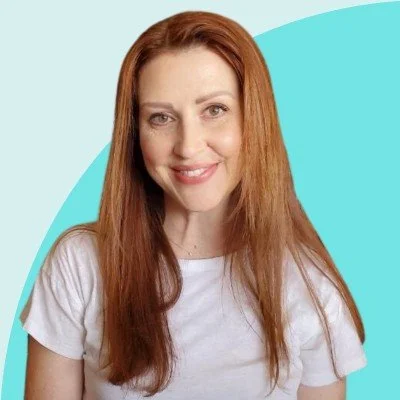
Erin Walsh-Beguin
Senior Director, Global Talent Acquisition Operations & Employer Brand - GoDaddy
Erin Walsh-Beguin has been named to the Talent 100, Class of 2026, the annual award recognizing up to 100 leaders in each category of talent acquisition. Honorees are nominated by peers or found by committees that look for excellent work wherever it happens, then chosen for the depth of their craft and their impact on hiring. This is Erin's story.
Erin Walsh-Beguin spent the first half of her career asking a question nobody was paid to answer: how does this actually work? Recruiting operations did not exist as a function when she started, so she built it into the margins of every job she held until it became the whole job.
The turn came from a confidential job ad on Monster.com. No company name, just a list of responsibilities. Walsh-Beguin, newly back in Arizona after a stretch doing HR in New York City, read it and recognized her own working life reflected back at her. She applied. The employer turned out to be a financial services company standing up a new office in the Phoenix market, and the role turned out to be the hinge of everything that followed: a hybrid HR and recruiting coordinator job that tilted, month by month, further toward recruiting.
Her remit at GoDaddy today runs the full width of talent operations. She owns the recruiting coordinator team and all of their full desk work, from scheduling and offer documentation to background check adjudication and initiating onboarding. She also owns the systems: platforms, tools, integrations, compliance, employer brand, and data. It is an end to end mandate, and she reached it not through a technology track but through two decades of refusing to treat process as somebody else's problem.
The Generalist Who Became an Operator
Walsh-Beguin pivoted away from what she had studied after college and, in 1999, joined a tech placement agency just ahead of the turn of the millennium. That was where she started learning HR, in an era when the phrase HR generalist still meant something expansive. She loved the breadth of it: working with employees, working across functions, carrying a dozen unrelated responsibilities in a single week. Recruiting was not the draw. It was something she dabbled in when a role opened up, interesting mostly because it gave her a reason to sit down and understand somebody's background.
The financial services model changed that. Coordinators there handled the traditional administrative spine of hiring, offer letters, start date confirmations, background checks, but they also learned to review resumes and run initial screens, deciding for themselves who advanced to a recruiter. It was her first real step into recruitment, and from there her titles followed a recognizable arc: recruiting coordinator, recruiter, recruiting leader.
What was less conventional was what she did alongside those titles. How do systems integrate? Where are the efficiencies that get you to a hire faster without skipping a single step of due diligence? She held no HR technology title and there was no recruiting operations department to join, so she went looking for the work anyway, volunteering into projects that touched stages, handoffs and tooling. The standard she set for herself was demanding: an improvement only counted if it was scalable and sustainable rather than clever once.
In her last role before joining her current organization she was a player coach, carrying a requisition load while owning the systems, the tools, and the processes. After roughly seventeen years in traditional recruiting delivery, she applied for a job that was operations and nothing else. "I'm a process-oriented individual anyway," she says, "and so it just sort of works."
AI as Assistant, Not Replacement
Walsh-Beguin is enthusiastic about AI and precise about where she draws the line. Personally, she uses every tool her company permits: gathering and synthesizing research, condensing dense material into SOPs, collapsing administrative work that once consumed hours or days into a fraction of that. She is genuinely fascinated by the technology and by what is happening behind the scenes.
Professionally, her interest sits at a specific intersection: where technology meets the candidate experience. She is unequivocal that recruiting should stay a human experience. A nervous, excited candidate talking to a bot is having a fundamentally different conversation than one talking to a person, and she does not think that trade is worth making. What she will happily automate is everything that carries none of that human weight. She wants intelligent automation inside the ATS so that no coordinator is manually dragging a candidate to the next stage, and so that whatever is supposed to happen next simply triggers itself. She sees a real role for the voice platforms now maturing, which can clear the standard questions every company asks everyone so that live conversation goes to the key skills and behaviors that actually need assessing. She is drawn, too, to transcription that produces an AI summary, still editable by a human, that flows straight into a scorecard, because that relieves administrative burden and gets hiring feedback collected faster at the same time.
"I don't think the human experience of recruiting is dependent on whether or not I am sending a standard, hey, we'd like to talk to you, email," she says. That distinction is the whole of her philosophy: automate the burden, protect the conversation.
Running Toward, Not Away
Asked what she would tell someone early in a talent career, her answer is a question she wants them to put to themselves first. Are you running away from something, or running toward something? If it is the former, she warns, whatever you are fleeing will follow you in some form or fashion. Difficult situations and difficult people are not geographic problems. If it is the latter, if your skills have kept developing while the work has stayed exactly the same, then wanting the next step makes complete sense. Either way, the real work is self-awareness. "They just really need to know what they want," she says, because no one else can do that accounting for them.
The Talent 100 exists to celebrate the people shaping the future of how the world hires, and few embody that better than Erin. We are honored to welcome Erin Walsh-Beguin to the Talent 100, Class of 2026, and grateful for the experience, perspective, and craft they bring to this community. Congratulations, Erin. Welcome to the Talent 100.
