Michael Goldberg
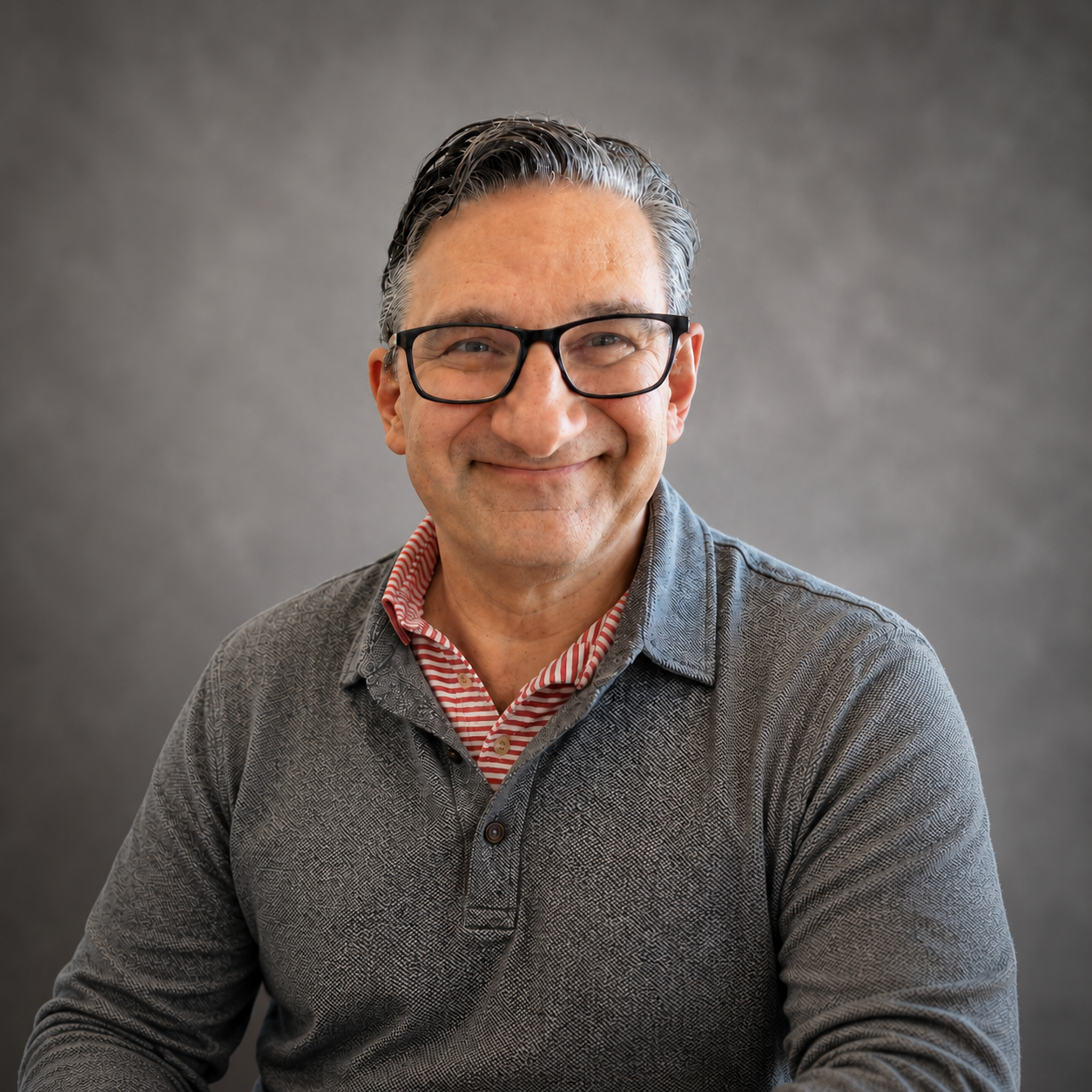
Michael Goldberg
Founder and Managing Partner - Hiring Transformed
For Michael Goldberg, recruiting was never an accident.
While many talent leaders describe "falling into" recruiting, Michael made a deliberate decision early in his career to move into human resources because he wanted to help people.
After graduating from college, he spent five years with Marriott Corporation in front-of-house operations, where he discovered a passion for serving and supporting others.
“I knew I liked to take care of people.”
That realization eventually led him to pursue a career in HR, where he believed he could have a meaningful impact on employees and organizations alike.
Armed with a psychology degree and later an MBA in Human Resources Management, Michael began building a career that combined his interest in human behavior with his desire to help people succeed.
His earliest HR roles covered nearly every function imaginable—from benefits and payroll to employee relations and recruiting.
While recruiting was initially just one part of a broader HR career, it quickly became the area that energized him most.
In 2001, Michael made the decision to focus fully on talent acquisition.
“I wanted to focus on the talent side of it—the growth, development, and employee journey.”
That decision would shape the next chapter of a career dedicated to helping organizations identify, attract, and develop exceptional talent.
Learning the Business Before Recruiting for It
When reflecting on the leaders who shaped his career, Michael immediately points to one mentor: Tom Pond.
Tom introduced Michael to a principle that continues to define his leadership philosophy today.
Learn the business first.
Rather than remaining confined to an office, Tom encouraged Michael to spend time in the field, learning how employees actually performed their jobs and understanding the realities of day-to-day operations.
“He taught me to learn the business and get out into the business.”
That meant riding alongside employees, observing their work firsthand, asking questions, and building relationships across the organization.
The experience fundamentally changed how Michael approaches talent acquisition.
Instead of viewing recruiting as simply filling open positions, he learned that effective recruiting requires a deep understanding of the people, culture, operations, and challenges that make a business successful.
Every role Michael has held since then has followed the same approach.
Before recruiting for a position, he makes it a priority to understand the business, learn the work, and connect directly with the people doing it.
For him, credibility is built through presence and curiosity.
“You've got to understand the business first.”
That philosophy has helped him build stronger partnerships with hiring managers while earning trust from employees across organizations.
Recruiting in the Age of AI
Having spent decades in talent acquisition, Michael has witnessed every major transformation the industry has experienced—from faxed resumes and newspaper advertisements to online job boards, LinkedIn, and now artificial intelligence.
While AI dominates today's conversations, Michael believes the biggest shift isn't simply about adopting new technology.
It's about becoming more operationally strategic.
“Don't just be an input-output recruiter.”
For Michael, modern talent acquisition leaders must focus on improving processes, supporting hiring managers, and leveraging technology to remove administrative burdens rather than replace human judgment.
He sees AI as a tool that can automate scheduling, improve workflows, surface talent insights, and help recruiters spend more time on high-value work.
However, technology alone is not enough.
Recruiters must still understand their business, align closely with hiring managers, and use data to make smarter decisions.
In his view, organizations that simply push resumes through a process without evolving their approach risk being left behind.
The future belongs to recruiters who embrace technology while strengthening the human aspects of the profession.
Advice for Talent Leaders in 2026
As recruiting continues to evolve, Michael believes the fundamentals remain remarkably simple.
Show people that you care.
Throughout his career, he has found that the most successful recruiters are not necessarily the ones with the most sophisticated tools or the largest networks.
Instead, they are the people willing to invest time in understanding others, building relationships, and doing the work that many overlook.
“Show you give a damn.”
That mindset applies equally to candidates, employees, hiring managers, and business leaders.
Technology can accelerate processes, but genuine human connection remains the foundation of successful talent acquisition.
For Michael, the future of recruiting is not about replacing relationships with automation.
It's about using technology to create more opportunities for meaningful interactions.
By combining business understanding, operational excellence, and a people-first approach, Michael Goldberg represents the kind of talent leader helping shape the future of recruiting while never losing sight of the human side of the profession.
