Matt Norell
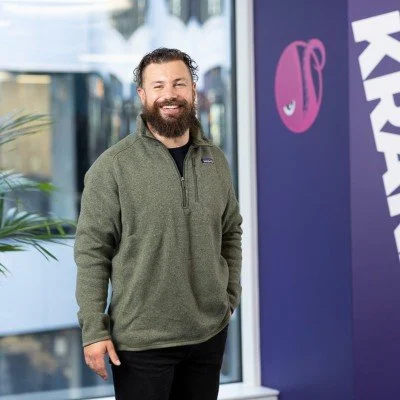
Matt Norell
Head of Talent, Kraken
For Matt Norell, recruiting was never part of some carefully mapped-out career plan.
Like many successful talent leaders, he simply “fell into it.”
After spending time living in New Zealand, Matt moved to London nearly 12 years ago unsure of exactly what direction he wanted to take professionally.
What he did know, however, was that he wanted to work in a people-oriented environment where he could build relationships and interact with others every day.
A friend suggested he try recruitment.
That single recommendation ultimately launched what has now become a long and highly successful career in talent acquisition and leadership.
“I definitely fall into the ‘just falling into recruitment’ category,” Matt shared.
Matt began his career working within agency recruitment, where he spent several years learning the fundamentals of hiring in a fast-paced and highly competitive environment.
Over time, he worked across a variety of roles before eventually transitioning into in-house recruiting through an RPO partnership.
That opportunity ultimately led him to Octopus Energy and later to Kraken, where he continues helping scale one of the fastest-growing technology businesses in the industry.
Today, Matt plays a key role in helping Kraken scale globally while navigating the complexities that come with rapid organizational growth.
“We’re a 2,200-person SaaS business that’s constantly scaling,” he explained.
Throughout his career, Matt has remained passionate about building recruiting organizations that move quickly while still staying deeply people-focused.
That balance between urgency, empathy, and operational excellence has become a core part of his leadership philosophy.
What Shaped His Leadership Philosophy Throughout His Career
Matt credits several leaders throughout his career for helping shape the way he approaches recruiting and leadership today.
The first was his very first manager in agency recruitment, a leader named Ray.
Agency recruiting environments can often be intense, high-pressure, and heavily sales-driven, especially early in someone’s career.
According to Matt, Ray helped him learn one of the most important lessons in recruiting: developing a strong sense of urgency.
“He helped me understand what was impactful and what wasn’t,” Matt explained.
That ability to identify priorities quickly and move decisively remains something Matt still values highly when evaluating talent and building teams today.
Another major influence was Jamie Cross, Matt’s first manager after transitioning into in-house recruiting through Talentful.
While Matt appreciated the lessons learned in agency recruiting, Jamie introduced him to a very different style of leadership — one rooted in support, psychological safety, and long-term development.
“Jamie taught me what leadership and management should actually feel like,” Matt said.
Jamie showed Matt that strong leadership doesn’t just involve driving performance — it also means creating an environment where people feel supported, challenged, and empowered to grow.
That experience significantly shaped how Matt now leads his own teams.
Today, Matt also credits Kraken’s Chief People Officer, Vicky, as one of the leaders currently helping him grow into the next stage of his career.
As Kraken continues scaling rapidly, Matt says he’s learning constantly while navigating increasingly complex leadership challenges.
“She’s hugely supportive, and she gets it,” he explained.
Matt believes strong leaders are those who continue investing in others while helping them grow into larger responsibilities over time.
How AI Is Reshaping Recruiting
Like many talent leaders, Matt sees AI fundamentally changing the recruiting industry.
However, he believes the biggest transformation is only beginning to happen now.
Over the last 18 months, Matt says the recruiting space has experienced an overwhelming amount of AI-related noise, with countless tools emerging across sourcing, scheduling, note-taking, applicant management, and other areas of talent acquisition.
For Matt, one of the biggest challenges has been separating genuinely valuable technology from temporary hype.
“There’s so much noise,” he explained.
According to Matt, organizations are now beginning to identify which AI platforms create long-term value and which ones simply add complexity.
Despite the crowded landscape, he believes AI’s impact on recruiting efficiency is enormous.
From sourcing and applicant management to interview scheduling and administrative workflows, AI is helping recruiters reclaim time that was previously spent on repetitive operational tasks.
That time, Matt believes, should now be redirected toward more meaningful human interaction.
“All AI should be enabling you to do is be a much more human-centric recruiter,” he said.
Rather than replacing recruiters, Matt sees AI as a tool that strengthens the human side of talent acquisition.
By automating administrative work, recruiters can spend more time helping candidates navigate offers, supporting hiring managers, and building stronger stakeholder relationships.
For Matt, the future of recruiting remains deeply relationship-driven — AI simply creates more space for recruiters to focus on those relationships.
He also believes AI is unlocking creativity within recruiting teams in ways that were previously impossible.
Matt shared that members of his team are now building tools, prototypes, and workflow concepts independently using platforms like Cursor and Claude.
“We’ve been given the opportunity to build stuff that before only engineers could have built,” he explained.
According to Matt, recruiters no longer need to rely entirely on engineering teams to test ideas or create proof-of-concept solutions.
That accessibility is allowing recruiting professionals to become significantly more innovative and strategic.
Matt’s Advice for Talent Leaders in 2026
As AI continues evolving, Matt encourages talent leaders to give their teams room to experiment, explore, and learn.
“I’d encourage leaders to push their teams to get creative,” he said.
Rather than limiting AI adoption to a few isolated use cases, Matt believes recruiting organizations should empower recruiters to actively test tools, build workflows, and think creatively about how technology can improve both efficiency and candidate experience.
For Matt, the most important thing leaders can do is maintain a people-first mindset while embracing technological innovation.
He believes recruiting teams that successfully combine operational efficiency with authentic human connection will ultimately create the strongest long-term impact.
While AI may continue reshaping how recruiting work gets done, Matt believes the core purpose of talent acquisition remains unchanged.
Recruiting is still fundamentally about understanding people, building trust, creating opportunities, and helping organizations grow through great hiring.
That balance between innovation, leadership, and human-centered recruiting is exactly what makes Matt Norell a deserving member of the Talent 100.
