Justin Hensley
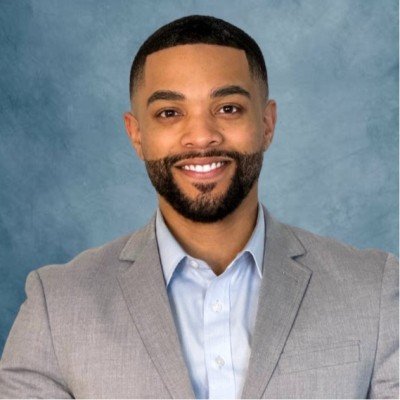
Justin Hensley
Sr. Director, HR Operations - Gartner
Justin Hensley didn't begin his career in recruiting.
His career started in HR, working in a shared services center before moving into analytics and eventually taking on leadership responsibilities within HR operations.
From there, his career continued to evolve.
He moved into HRIS, where he became increasingly involved in supporting talent acquisition as a stakeholder.
At the time, recruiting teams were facing challenges around standardizing workflows and improving processes for recruiters.
Justin saw an opportunity to help.
While working in HRIS, he was approached by the leader of talent acquisition with a simple question:
How would he feel about coming over to lead operations within talent acquisition?
Justin took the opportunity.
The move gave him the chance to understand recruiting from an entirely different perspective.
He had already developed experience across HR operations, analytics, and systems, but working directly within talent acquisition allowed him to see the entire candidate lifecycle from beginning to end.
It also challenged some of the assumptions he had previously held about recruiting.
He learned that recruiting is far more nuanced than it can appear from the outside.
Different areas of recruiting have different challenges, workflows, and requirements.
And through that experience, Justin developed a deeper appreciation for the recruiters doing the work every day.
He also came to recognize something he believes is often overlooked:
Talent acquisition is underappreciated and can sometimes be unfairly blamed for problems that occur further downstream in the organization.
The People Who Shaped His Leadership
Throughout Justin's career, several people have played an important role in shaping who he has become as a leader.
One of the most influential people in his personal life has been his wife's grandfather.
He was a pastor and a strong leader, and Justin credits him with teaching him important lessons about life, leadership, and his overall outlook.
His influence extended beyond professional development.
The lessons Justin learned from him helped shape how he approaches life more broadly.
Another major influence was Nakisha Lopez.
Nakisha was the director—and later CHRO—at Justin's previous company.
She has since moved on to lead Advocate Health as its chief people officer.
Justin credits her with teaching him a great deal about leadership and navigating corporate America.
Her influence helped him understand what it means to operate effectively within a large organization and lead people in a corporate environment.
The third person Justin highlighted was John Frampton.
John was another leader who had a significant impact on his career and gave Justin his first promotion.
At the time, Justin didn't know much about analytics.
But John took a chance on him.
He saw someone who was hungry, ambitious, and willing to learn and gave him an opportunity.
That experience reinforced an important lesson for Justin: sometimes leadership is about recognizing potential before someone has all the answers.
AI Is Giving Recruiters Time Back
As AI continues to reshape recruiting, Justin has seen several technologies begin to change how recruiters work.
One of the most significant developments has been what he describes as interview intelligence.
Instead of recruiters trying to listen to a candidate while simultaneously taking detailed notes, conversations can now be recorded and transcribed automatically.
That allows recruiters to focus more completely on the person sitting across from them.
Rather than worrying about capturing every detail, recruiters can concentrate on listening to the candidate's experience, understanding their background, and getting to know them as a person.
AI screening is another area Justin has seen gaining traction.
Organizations can configure AI systems to ask targeted questions based on the type of candidate profile or role they're trying to fill.
This can help reduce the amount of manual screening recruiters need to perform.
The benefit isn't simply saving time.
It gives recruiters more capacity to focus on higher-value activities, including building talent pipelines and developing relationships with hiring managers and business leaders.
AI Is Also Changing the Candidate Experience
Justin has also seen AI influence the recruiting process from the candidate's perspective.
One example is self-scheduling.
Traditionally, a candidate might apply for a position and then wait for a recruiter to review the application, conduct a screening, and coordinate an interview.
With AI-enabled workflows, that process can happen much faster.
A candidate can apply, answer pre-screening questions, and, if they meet the criteria, schedule an interview immediately.
From the candidate's perspective, that creates a very different experience.
Instead of waiting and wondering what happens next, they may leave the application process already knowing that an interview has been scheduled.
That immediacy can increase engagement with the opportunity.
Turning Conversations Into Actionable Insights
Justin also sees value in the ability to use AI to summarize interviews.
Once an interview is recorded and transcribed, AI can help turn that conversation into a concise summary that recruiters can share with hiring leaders.
Instead of spending significant time manually organizing notes, recruiters can quickly identify key points from the conversation and communicate why a candidate may be a strong fit for an open position.
For Justin, the value of these technologies comes down to one thing:
Giving recruiters time back.
When administrative tasks become more automated, recruiters have more time to focus on the parts of the job that require human judgment and relationships.
That includes talking to candidates.
Building pipelines.
And partnering with hiring leaders.
Listen. Stay Curious. Be Inquisitive.
When asked what advice he would give other talent leaders, Justin's initial answer was remarkably simple:
Listen.
Stay curious.
Be inquisitive.
But behind those three ideas is a deeper leadership philosophy.
Justin believes leaders often fall into the trap of assuming they already understand a situation.
That can be especially easy when you're an expert in your own area.
A talent leader may walk into a conversation with a business leader believing they already understand the problem.
But they may not.
Sometimes, leaders simply don't know what they don't know.
Justin believes the better approach is to approach conversations with a genuine desire to learn.
Ask questions.
Listen carefully.
Seek to understand.
And, most importantly, try to see the situation through the other person's perspective.
Seeing Through Someone Else's Lens
For Justin, curiosity is more than just asking questions.
It's about understanding someone else's point of view.
When working with business leaders, he believes talent professionals should take the time to understand what those leaders are actually experiencing rather than immediately assuming they know what the problem is.
That means seeing the situation through their lens.
Seeing it through their eyes.
And understanding what matters to them before trying to provide a solution.
There is another benefit to truly listening.
When you genuinely listen to someone, you create the conditions for them to listen to you as well.
That simple practice can have a powerful effect on leadership.
Cultivating Relationships
Justin also emphasizes the importance of relationships.
Talent leadership isn't simply about processes, systems, or technology.
It's about people.
The relationships a leader develops with candidates, business partners, hiring leaders, colleagues, and other stakeholders can have a lasting impact on their effectiveness.
For Justin, cultivating those relationships goes hand in hand with curiosity and listening.
The better you understand people, the better positioned you are to work with them.
And the stronger those relationships become, the more effectively you can collaborate.
From Recruiting to Global HR Operations
Today, Justin's primary role has evolved beyond recruiting.
While he continues to work with talent acquisition and remains a stakeholder in the function, his current focus is leading global HR operations.
That distinction is important when it comes to technology decisions.
Justin may influence and contribute to conversations around talent technology, but he isn't necessarily the sole decision-maker when it comes to tools specifically used by talent acquisition.
His experience across HR operations, HRIS, analytics, and talent acquisition, however, gives him a broad perspective on how those functions connect.
That broader view allows him to understand not only what recruiting teams need, but also how those needs fit within the larger HR ecosystem.
Staying Curious in a Rapidly Changing Industry
Justin's career has been defined by movement.
He moved from HR shared services into analytics.
From analytics into operations.
From operations into HRIS.
And from HRIS into talent acquisition.
Each transition required him to learn something new.
Each opportunity expanded his understanding of the HR function.
And that evolution is reflected in the advice he gives today.
Don't assume you know.
Stay curious.
Listen.
Ask questions.
And keep learning.
The recruiting and HR landscape will continue to change as AI and other technologies become more sophisticated.
But Justin believes the fundamentals of good leadership remain remarkably simple.
Understand people.
Build relationships.
And be willing to learn from the people around you.
For Justin Hensley, the future of talent isn't simply about adopting the newest technology.
It's about remaining curious enough to understand how that technology can actually serve people—and humble enough to recognize that there is always more to learn.
