Julie Zimmerman
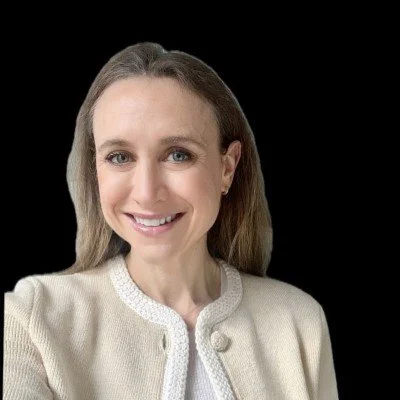
Julie Zimmerman
Founder & Principal , Higher Education and EdTech Advisory
Julie Zimmerman’s path into talent acquisition was anything but linear, but every step along the way added a layer to how she now approaches people, hiring, and organizational growth.
She began her career in higher education, working in admissions for both undergraduate and graduate programs. In many ways, it was her first exposure to recruitment—just in a different context, focused on guiding students into the right academic paths.
From there, Julie expanded into partnership roles, working closely with US government stakeholders including Congress and the State Department. She later moved into program development roles across both startups and larger organizations, gaining experience in building and scaling initiatives from the ground up.
Her entry into formal HR and recruiting came later, when she applied for an early career recruitment and talent management role at Par Technology.
That move marked the beginning of her transition into talent acquisition, but Julie sees her recruiting foundation as something that had been building long before that moment.
“I’ve always done recruiting in other ways, just not for a company,” she reflected, pointing to her earlier work in education, fellowships, and program selection.
For Julie, recruitment has always been about identifying potential and helping people find the right environment to grow—even before she officially stepped into the field.
What Shaped Her Leadership Philosophy
Throughout her career, Julie has been shaped by leaders who combined empathy with clarity, and kindness with strong decision-making.
One of the most influential leaders in her journey was Sophie Taylor, her former supervisor at Mural Health. Julie describes Sophie as someone who deeply understood both the big picture of hiring strategy and the nuanced needs of individuals.
“She was able to connect with individuals and see gaps and needs that hiring managers weren’t always able to identify,” Julie shared.
That ability to balance organizational thinking with individual potential left a lasting impression on Julie’s own leadership style.
Another key influence was Candace Levy, a leader she worked with in a public tech company environment. Julie credits Candace with demonstrating that kindness and friendliness can be a powerful leadership advantage, even in high-performance corporate settings.
“She led with friendliness and kindness in a corporate setting, and I saw what a great ROI that had,” Julie explained.
That approach reinforced Julie’s belief that human-centered leadership can directly strengthen hiring outcomes, team performance, and long-term organizational success.
A third formative influence came from JC Benilla, who led recruitment at NYU during Julie’s time working on student programs and admissions.
Through JC, Julie learned how to think more creatively about talent pipelines and recruitment strategy, especially in non-traditional environments.
“He helped me step outside my comfort zone when looking at recruiting,” she said, noting how that perspective shaped her ability to think beyond conventional hiring models.
Together, these leaders shaped Julie’s belief that recruiting is not just about filling roles—it is about building systems that recognize potential in all its forms.
How AI Is Reshaping Recruiting
Julie sees AI as both a powerful tool and a necessary challenge for the recruiting profession.
On one hand, she recognizes its ability to accelerate high-volume processes, improve efficiency, and help recruiters identify patterns they might otherwise miss in large datasets of candidates.
“It’s been valuable in going through applications faster and identifying potential that might have been overlooked,” she noted.
She also acknowledges that AI is reshaping how candidates approach job applications, with tools like ChatGPT helping people better understand roles, refine resumes, and assess fit before applying.
At the same time, Julie is cautious about over-reliance on automation.
When hiring decisions become too dependent on machine-driven analysis, she believes important human context can be lost.
“Sometimes relying on a machine means missing things,” she explained, highlighting the risk of reducing candidates to patterns rather than people.
She also notes that AI introduces new challenges around authenticity, particularly when candidates use it to heavily modify resumes in ways that may not accurately reflect their experience.
For Julie, the future of recruiting depends on balance—leveraging AI for speed and insight while preserving human judgment and interpretation.
Her Advice for Talent Leaders in 2026
Julie’s advice to talent leaders is grounded in two core principles: continuous learning and intentional humanity.
She believes the pace of AI development requires recruiters and HR professionals to stay curious, adaptable, and open to change.
“Keep learning. AI is moving faster than any technology we’ve seen before,” she emphasized.
At the same time, she strongly believes that the human element of HR must remain central to the profession.
Despite technological advancement, she sees recruitment as fundamentally rooted in relationships, empathy, and connection.
“It’s so important that we continue that engagement element in our field,” she said, reinforcing the idea that human resources must remain human-centered.
For Julie, the most successful talent leaders will be those who can integrate new technologies without losing sight of the people behind every hire.
That combination of cross-sector experience, people-first leadership, and thoughtful perspective on AI is exactly what makes Julie Zimmerman a standout member of the Talent 100.
