Debbie Douglas-Henry
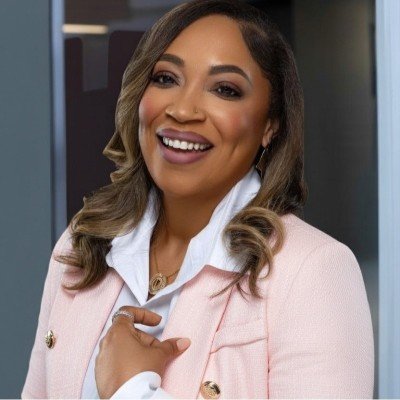
Debbie Douglas-Henry
Talent Acquisition/Staffing Leader/Consultant, 3DHR Consulting, LLC
Like many leaders in talent acquisition, Debbie Douglas-Henry’s journey into recruiting was not entirely linear.
She originally studied social work and spent years immersed in clinical-focused internships before realizing that while she deeply valued helping people, the traditional social work path was not the right fit for her long term.
“I realized it was a little bit too clinical for me,” Debbie explained. “So I started asking myself: how can I still help people, but in a less clinical setting?”
That question ultimately led her into human resources—and eventually into talent acquisition, where she discovered a profession that combined relationship-building, problem-solving, and people advocacy in a way that immediately resonated with her.
After enrolling in graduate school for Human Resources Management at The New School in New York, Debbie landed an opportunity at The Shubert Organization, the legendary theatrical management company behind many Broadway productions.
There, she began her career as a staffing assistant, recruiting and hiring ushers for Broadway theaters across New York City.
That experience became the starting point of what would grow into a long and impactful career in talent acquisition.
Soon after, she transitioned into a recruiting role at MTV Networks—now known as Paramount—where she expanded her experience across scheduling, candidate coordination, recruiting operations, and large-scale talent support.
“I pretty much never left the field,” Debbie shared. “And I really love it.”
Over the years, Debbie built a career grounded not only in recruiting expertise, but in leadership, relationship management, and people-first thinking.
Today, through both her corporate leadership experience and consulting work, she continues to advocate for a version of talent acquisition that balances innovation with humanity.
Leadership Shaped by Representation and Empowerment
When reflecting on the leaders who shaped her career, Debbie points first to representation and belonging.
One of her earliest managers at MTV Networks left a lasting impression because she was a woman who looked like her—a Black Hispanic woman operating successfully in leadership.
“She always made sure I felt like I belonged in the room,” Debbie said.
That experience reinforced confidence, ambition, and the belief that leadership was attainable.
Another influential leader taught her a principle that has remained central throughout her career:
“Solve the problem, but maintain the relationship.”
That philosophy became foundational in how Debbie approaches recruiting, leadership, and workplace conflict.
Whether working with candidates, hiring managers, peers, or clients, she believes sustainable success comes from balancing accountability with empathy and preserving relationships even during difficult moments.
A third influential leader demonstrated what true empowerment looks like in practice.
Rather than micromanaging, this leader focused on autonomy, trust, and creating an environment where team members could thrive independently while still feeling supported.
That experience shaped Debbie’s own leadership philosophy—one rooted in servant leadership, mentorship, and shared success.
“She hired us because she believed we were capable,” Debbie explained. “And that taught me how important it is to empower people to trust themselves.”
For Debbie, strong leadership is not about control. It is about guidance, support, and helping others discover their own strengths.
Balancing AI With the Human Side of Recruiting
As AI continues transforming the recruiting industry, Debbie sees both tremendous opportunity and important caution.
She acknowledges that AI has dramatically improved efficiency across recruiting workflows, streamlining tasks that once required hours of manual effort.
“It saves us time. It saves brainstorming power. Things that used to take hours can now take moments,” she explained.
But while she embraces technology and uses AI herself, Debbie is equally mindful of the risks that come with over-automation.
In particular, she worries that some organizations are beginning to replace meaningful human interaction with overly broad automated assessment systems.
Her concern is not with AI itself, but with losing the human judgment that allows recruiters to recognize qualities technology often cannot fully measure—integrity, humility, emotional intelligence, authenticity, and potential.
“There are things AI can’t catch,” she said.
Debbie believes candidate experience remains one of the most important responsibilities in recruiting, especially in a highly competitive market where applicants are already facing uncertainty and emotional fatigue.
For candidates, immediate automated rejections and impersonal workflows can create discouragement and disconnect.
That is why Debbie continues to advocate for balance: using AI to support recruiters rather than replace the human foundation of the profession.
“We can embrace emerging technology,” she said, “but we also have to remember the foundations and principles of what makes a strong recruiter.”
A Philosophy Rooted in Human Connection
Throughout her career, Debbie has consistently returned to one central belief: talent acquisition is fundamentally about people.
Whether she is leading teams, mentoring recruiters, partnering with hiring managers, or evaluating technology, her approach is grounded in empathy, authenticity, and human connection.
“I always put the human in human resources,” she said.
That mindset continues to define both her leadership style and her vision for the future of recruiting.
Her Advice for Talent Leaders in 2026
As the recruiting industry continues evolving rapidly through automation and AI adoption, Debbie encourages talent leaders not to lose sight of what makes recruiting effective in the first place.
Technology can improve speed, efficiency, and scale—but relationships, intuition, and human understanding remain irreplaceable.
Her advice to talent leaders is to embrace innovation thoughtfully while protecting the candidate experience and preserving authentic human interaction throughout the hiring process.
For Debbie, the future of recruiting is not about choosing between AI and people.
It is about learning how to combine both responsibly.
The organizations that succeed, she believes, will be those that use technology to enhance recruiters—not distance them from the people they are ultimately trying to serve.
That people-first philosophy, combined with her leadership experience and thoughtful perspective on the future of talent acquisition, is what makes Debbie Douglas-Henry a standout voice in the Talent 100.
