Dayna Gray
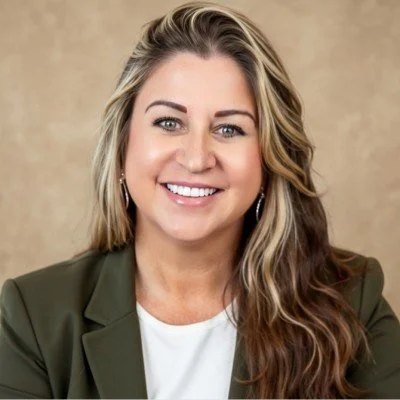
Dayna Gray
Founder & Executive Recruiter, Graystone Partners
Dayna’s path into recruiting wasn’t something she initially set out to do—it evolved through early exposure to both sales and talent, and a growing realization of where her strengths truly lay.
She began her career in staff augmentation on the sales side, working a full-desk role that combined both recruiting and business development. While she was capable in sales, she quickly noticed where she had the most impact.
It wasn’t in selling products—it was in working with people.
She found herself more energized by conversations with candidates, understanding their backgrounds, and helping align them with meaningful opportunities. Over time, she realized she was more successful in recruiting than in new business development.
That shift in performance and passion ultimately led her to fully transition into recruiting in 2011.
What started as a hybrid role became a long-term career built around connecting people to opportunity and advocating for talent in a competitive market.
The Leaders Who Shaped Her Approach
Throughout her career, Dayna has been influenced by leaders who each shaped a different dimension of how she leads today.
Jenny Deedy was the first to take a chance on her and bring her into recruiting. That opportunity was foundational—she saw potential in Dayna before she fully saw it in herself, setting the stage for her entire career in talent acquisition.
Laura Smith, Vice President of Human Resources at Dexian, played a critical role during Dayna’s transition from agency to corporate recruiting. She introduced her to a new level of leadership maturity—emphasizing accountability, directness, and the difference between being “nice” and being effective. That mentorship became a turning point in how she approaches leadership.
Lydia Wilson, Chief People Officer at Dexian, expanded her thinking beyond hiring and into the full employee lifecycle. She emphasized employee experience, psychological safety, and long-term engagement—helping Dayna understand what happens after the hire and how it shapes retention and culture.
Together, these leaders shaped a leadership philosophy grounded in accountability, empathy, and employee-centered thinking.
AI Is Strengthening the Recruiter’s Role, Not Replacing It
Dayna sees AI as a powerful enhancement to talent acquisition rather than a threat to it.
In her view, AI helps reduce the administrative burden that often slows recruiters down. Tasks like note-taking, transcription, and interview documentation can now be streamlined, allowing recruiters to focus more on strategic and human-centered work.
It also improves how candidates are positioned in front of hiring managers, helping recruiters better tell their story in a competitive market.
Most importantly, it allows recruiters to spend more time doing what matters most—engaging with people.
For Dayna, AI serves as a lever that strengthens productivity while preserving the human element at the core of recruiting.
Advice for Talent Leaders Navigating 2026
Looking ahead, Dayna emphasizes that talent leaders must become more strategic, data-driven, and technology-enabled—while still protecting the human experience at the center of hiring.
The industry is being shaped by economic uncertainty, tighter budgets, evolving candidate expectations, and rapid technological change. In this environment, reacting is not enough.
Her advice is to be intentional.
Leaders must embrace technology like AI, but also ensure it is implemented in a way that enhances—not replaces—the candidate and hiring manager experience.
The most effective talent leaders will be those who can balance speed with strategy, and innovation with empathy.
In a landscape defined by constant change, that balance will be what sets strong leaders apart.
